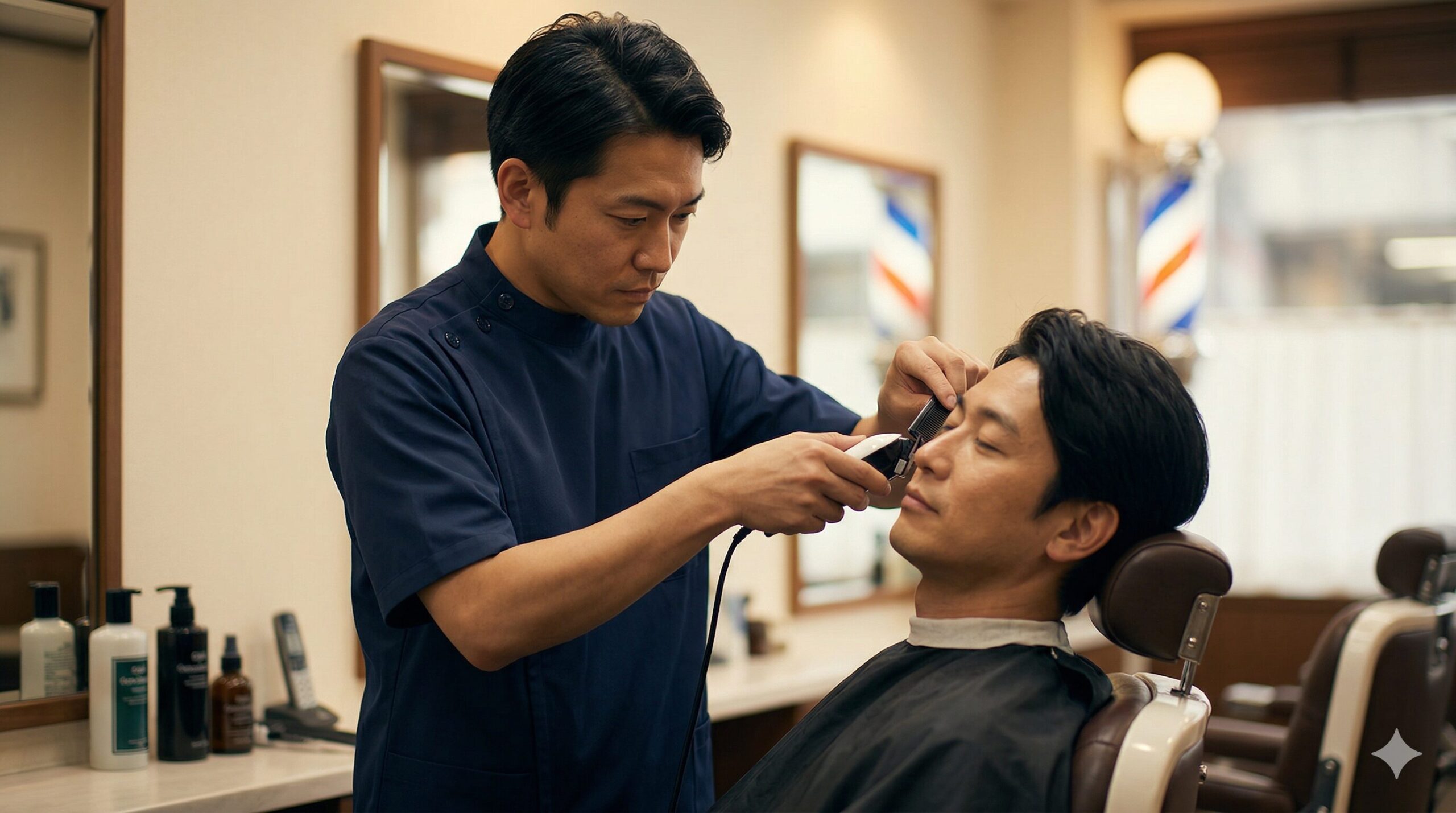
Quick answer: Japanese barbershops are quiet because we’re concentrating and giving you space — not because anything is wrong. And talking is equally welcome. Whichever you prefer, we’ll follow your lead.
You open the door. It’s quiet. No conversation, just the sound of clippers.
You sit down. The cut begins. Still nothing. And the questions start: Is this normal? Are they annoyed? Should I be saying something?
I get asked about this constantly. Here’s the honest answer from the other side of the chair.
Why It’s So Quiet
We’re concentrating
Japanese barbers work at millimetre level — tracking your hairline, checking the blend, adjusting balance. That focus is where the quality lives. Small talk competes with it.
We’re giving you space
In Japan, quiet time is treated as a form of hospitality. We don’t talk much because we don’t want to intrude on your relaxation.
So: quiet doesn’t mean unfriendly. It usually means we’re being considerate.
The Cultural Gap
In many countries, conversation is part of the service. Small talk is expected, and silence would feel like a failure.
In Japan, silence is normal and focus is valued. Neither is better — they’re just different defaults. Knowing which one you’ve walked into removes almost all the awkwardness.
Something That Happens a Lot
After a few minutes in the chair, many visitors start to feel sleepy.
That’s not boredom, and it isn’t random. It usually means your body has decided you’re safe. Honestly, it’s one of the best compliments a barber can get.
How to Tell What Your Barber Prefers
Barbers have communication styles too. You can read it in the first minute.
Open to talking
- They ask small questions
- Frequent eye contact in the mirror
- Big, warm reactions
- They bring up Japan or your trip
Prefers quiet
- Short, simple replies
- Calm eyes, fixed on the cut
- Conversation doesn’t continue naturally
- They seem a little shy
Both are completely normal. And most of us adjust the distance based on your reactions — so you’re steering more than you realise.
“Not This Question Again…”
Let me address something visitors tell me privately.
“Where are you from?” “Sightseeing or business?” “How long are you staying?”
By day three of a trip, you may have answered these fifteen times. I understand why it starts to feel like a script.
But here’s what’s behind them: for Japanese people these are the safe openers — the ones least likely to offend a stranger. They’re not a lack of curiosity. They’re the polite door being held open. A short answer plus one detail of your own (“Australia — I came for the food”) is all it takes to move past them.
Topics That Always Work
If you do want to chat, these three land every time.
① Food
Ramen, izakaya, yakitori, even convenience store food. Food opens everything.
② Anime and manga
A genuinely global language now. ONE PIECE, Dragon Ball, NARUTO, Jujutsu Kaisen, Slam Dunk. Plenty of us are into deeper cuts too.
③ Where you’ve been
Onsen, festivals, shrines, arcades, Dotonbori. Telling us where you went is always welcome — and we’ll usually tell you where to go next.
Topics Better Left Alone
- Politics
- Religion
- Crime, safety, international conflicts
- Personal or family problems
- Negative comments about Japan — or about your own country
Japan places a high value on keeping the atmosphere comfortable. Avoiding these keeps the hour pleasant for both of us.
Just Say Which You’d Prefer
You don’t have to guess or endure. Say it, or show it on your phone — translation apps handle this perfectly.
If you want to talk:
- “It’s OK to talk while cutting.”
- “I’d like to chat a little.”
If you’d rather be quiet:
- “I’d like a quiet experience today.”
- “I want to relax, so quiet is nice.”
Neither will offend anyone. Your preference is simply respected.
Pro Tip: Short-Word Talk
Short sentences are far easier for Japanese speakers to catch than long ones. Try it:
You: “I like ramen.”
Barber: “Me too! I love ramen!”
You: “Sushi is very delicious.”
Barber: “Yes! And Japanese sake is great!”
That’s a real conversation. It doesn’t need to be more complicated than that.
Honestly, From Our Side
Conversations with visitors about food, cities, anime, travel and games are genuinely fun for us. I once spent an entire cut talking about The Legend of Zelda: Tears of the Kingdom — a game that steals your time in the best possible way.
But at the same time there’s always a quiet worry: what if I’m making them uncomfortable? That worry is exactly why we hold back. So if the silence feels heavy to you, one sentence from your side breaks it instantly — and we’ll be glad you did.
Summary
- ✔ Quiet = focus and consideration, not coldness
- ✔ Talking is equally welcome — just say so
- ✔ Feeling sleepy means you feel safe
- ✔ Short sentences work better than long ones
- ✔ Food, anime, and your travels are guaranteed topics
Silence in a Japanese barbershop doesn’t mean something is wrong. More often, it means everything is going right.
Let’s BARBER!! 💈
Before Your First Visit
👉 Japanese Barber Etiquette: What to Do (and Not Do)
👉 10 Must-Know Japanese Barber Phrases
👉 Why “Same as Last Time” Doesn’t Work Here


Comments